
Throughout the western hemisphere, the Atlantic hurricane season lays its affects to more than 35 million businesses and homes. Due to this, millions of people are left to live in fear as a result of torrential rains and devastating winds. Even more worse is the fact that these conditions lead to the destruction of power lines thereby leaving these people without electricity and communications that make them unable to make calls in search for help.
 The strong storm surges renders people unproductive throughout the region in the gulf cost of the United States which in turn leads to the shutting down of companies operations. The communication systems go down and companies are left in isolation from their customers, clients and the entire world at large. Land based cellular and radio telecom services become unreliable due to floods and winds and the only means of communication that people can turn to is satellite equipment. This is simply because satellite networks like Inmarsat, iridium and Lightsquared are the only ones capable of delivering communication.
 During these difficult times, you really need a satellite phone. Phones such as the iSatPhone Pro is powered by the Inmarsat network as well as the Iridium 9555 satellite phones are highly recommended. This is simply because these phones offer high quality network service as well as a superior network coverage footprint. These phones are therefore in a position to help you or your company to stay connected throughout the hurricane season especially in the aftermath of Ike and hurricanes Gustav.
During the hurricane disaster recovery periods, wireless communication equipment which includes iridium satellite phones can be used to facilitate public safety to both individuals and companies seeking dependable communication systems.
These phones are capable of facilitating communication when cities are faced by power outages and when cellular networks are down. This is very essential in that it ensures that there is connectivity between employees and hence continuous productivity and competitiveness.
In the bid for disaster preparedness, it is recommended that one acquires his or her satellite phone in advance. This is simply because during the hurricane season the demand for these phones goes high and on the other hand their delivery by the suppliers gets delayed depending on the projection path of the hurricane. It is therefore necessary to purchase these phones as soon as possible before the storms are upon us.
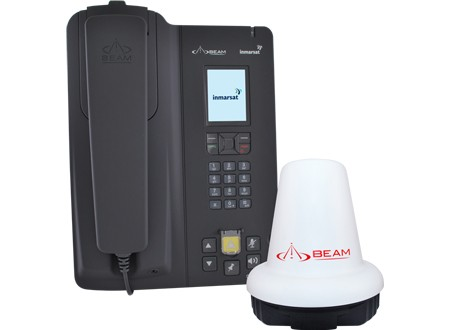
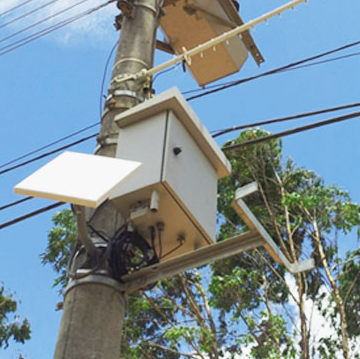
 The BGAN 9502 Satellite SCADA terminal is ideal for applications in environmental monitoring, video surveillance, Smart Meter, pipeline monitoring, compressor monitoring and any other projects which involve communication with remote assets. This terminal is power consumption friendly as it only draws 3 – 4 watts for an always open TCP-IP network connection. In idle or hibernation mode the terminal’s power consumption can be as low as 0.01 watts. Given that most of these applications are located in remote locations, power consumption is a major priority. With this model, it is easy to use solar power which can be installed at a very low cost to power the device.

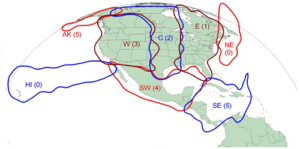 The network of this geostantionary satellite covers North American and tip of Central America, the Caribbean, Hawaii, and coastal waters. While users of terrestrial land mobile radios have to depend on the coverage of cell towers, satellite dispatch radio users rarely experience service interruptions because of the singular network structure. During emergencies, should terrestrial land based communications become compromised, satellites are the only viable option for communications.
 The MSAT-G2 push to talk radio communicates with the lightsquared satellite network and provides push to talk and PSTN voice services for all of North America and the northern portion of South American and the Carribean. The MSAT-G2 is both lightweight and practical, as it can be installed in vehicles, buildings, or put together as a “Go-Kit” for portable satellite communications. The “Go-Kit” comes in a water-resistant durable package that also comes with a battery that delivers power when on the go.
 Many different off the shelf interoperability modules and vehicular repeaters are compatibleMSAT G2 Satellite Radio with the MSAT-G2. It is possible to have interoperation between the MSAT-G2 and multiple different models and brands of wireless phones and radios with Push to talk capability using the interoperability modules. The range of the MSAT-G2 installed in a vehicle can be extended using vehicle repeaters. That set-up allows public safety workers to maintain connectivity in a car that has an LMR portable radio. The vehicle then works as the satellite repeater, allowing him to continue communications.
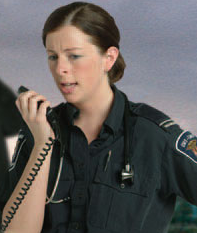 Lightsquared uses a “trunking” concept in their push-to-talk service that allows many different users to share a group of channels with the simple press of the PTT button. The network is designed to be as effective as possible despite having limited satellite power and bandwidth. Satellite power and call-handling resources are managed using demand assigned communication channels. “Call types” are also employed in the network to achieve the same results. When PSTN and cellular network congestion becomes a problem, Lightsquared’s group oriented communications take care of the issue by allowing large numbers to communicate on a single set of frequencies without ever using PSTN. A pre-defined period of activity defines when a frequency will be released.
 Crabbers are the men, and sometimes women, that take to the frigid waters north of 60 for a few weeks at a time in search of Alaskan king crab. This is considered by many to be the most dangerous job out there, with 20+ hour work shifts and an unforgiving sea some of the issues they have to face. Combine that with sub-zero temperatures and 40-foot waves and you have a recipe for extreme danger. It seems strange to most of us that people would put their lives at risk in order to put a delicious crab on our plates, but crabbers see the potential rewards as well worth the risk.
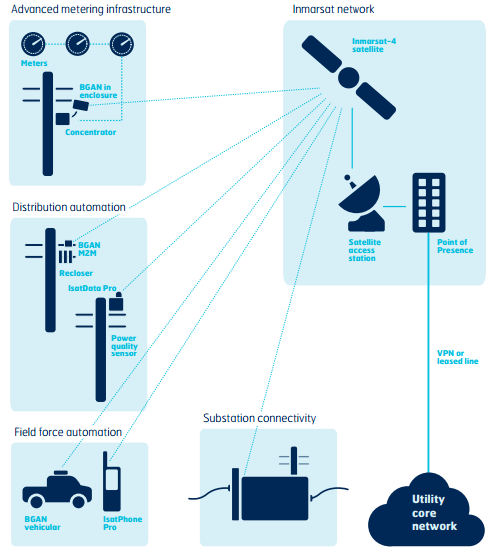
 By being able to deliver almost 37 times as much data as the competition, IsatData Pro has the ability toisatdata pro satellite m2m meet the increasing demand for richer information in the service. Businesses are now able to diversify their operations and share more via e-mail, electronic forms, remote management and more. The applications delivered by this M2M Satellite service include the maintenance of driver logs, text messaging remote workers, vehicle telemetry information, and the control and management of fixed assets.