What is the MSAT-G2 Satellite Radio?

hardware

The MSAT-G2 just might be the most underrated, over achieving communications satellite radio on the market today. Although understating its capabilities in this writer’s opinion, “blue collar” is another term one sometimes hears used to describe the MSAT-G2, more on that later.

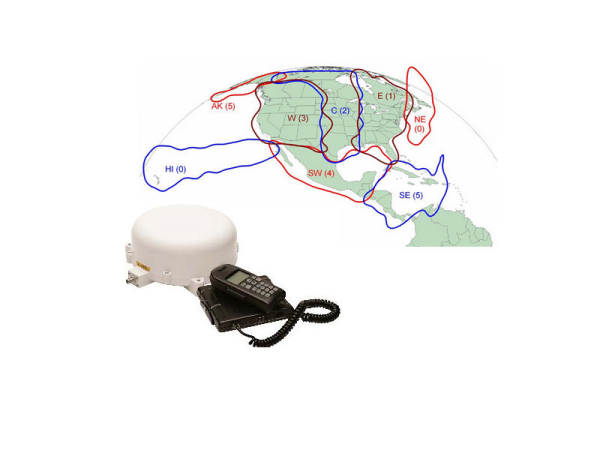
Originally launched in the mid 1990’s when satellite communications was truly in its infancy, the MSAT 1 and 2 satellites have been providing yeoman-like service to all of North America ever since. Skyterra 1, the massively (school bus size) powerful communications satellite launched in 2010 has taken over the original bird’s responsibilities now but MSAT continues to maintain Birds 1 and 2 in fully operational status just to provide redundancy in the event that it is needed. A sister satellite, Skyterra 2, sits on the ground ready for launch, also, just in case. MSAT-G2 Satellite Radio Service Area

For the first 10 years or so of MSAT satellite’s existence, Mitsubishi and Westinghouse manufactured the hardware that drove usage on the constellation. A few years back Hughes stepped up and contracted with MSAT to offer the G2 MSAT satellite, a much more compact, lighter, easier to install (and operate) terminal than those earlier versions. The G2, engineered to operate exclusively on the MSAT satellite constellation, was a huge success the minute it hit the market. It remains a best seller today!

Available in Land/Mobile (vehicular), Fixed (terrestrial) and Marine configurations, the MSAT-G2 is fully “plug and play”. The Land/Mobile unit COMPLETE, ships in a box 1 foot cubed and weighs less than 10 pounds, including the antenna, transceiver, handset and all cables. If you can open a box you can have this MSAT satellite radio configured, powered up and operational in less than 15 minutes!

If you’re looking to spend a lot of money on a satellite terminal that will take you and your crews days to install, weeks to learn to use and cost a small fortune to operate (assuming you can understand the rate plans at all!) then the MSAT-G2 is not for you. However…

  • If your business operates somewhere between Alaska and South America, Puerto Rico and Nova Scotia, including all North America coastal waters, the Gulf of Mexico and the Caribbean AND…
  • If you DO want your crews to welcome the satellite upgrade rather than dread it AND
  • If you like the idea of FLAT RATE UNLIMITED 24/7 voice communications between your entire fleet AND
  • If paying one nominal rate per minute for ALL your TELEHONE voice and data calls, (checking with the wife at home or emailing a document to the office) appeals to you then the MSAT-G2 may just be for you!

The price point for the G2 is comparable to other satellite radios on the market today, with the exception of the handhelds. Realistic retail pricing for the Land/Mobile unit will be in the mid to high $3,000.00 range, low to mid $4,000.00 for the Fixed and Marine versions due to the pole mount kits and longer heavier antenna cables that come with the fixed unit and the ruggedized salt water environment 3-axis antenna included with the Marine terminal.

This is fact! 75% of all satellite radio customers OVER estimate the bandwidth that they will need for their data requirements and under estimate the time they will spend using voice communications. As a result they spend too much money buying too much terminal, suffer an inordinately long learning curve, and end up using the terminal less than expected because of the cost of operations.

The MSAT-G2 solution will handle 90% of most customers’ data needs as well (emails and file attachments) and 100% of inter and extra company voice transmissions, all while saving you money. Oh, and don’t forget GPS asset tracking, built into the MSAT-G2 antenna, no additional hardware required.

What’s so special about the MSAT G2 Dispatch Radio?

satellite antenna

In less than 20 years, the mobile satellite communications business has evolved from a nicheMSAT G2 Satellite Radio market consisting of a very few very expensive options to today’s market, offering a wide variety of terminals supporting a near infinite range of functionality, spanning an equally confusing price point range. However, navigating the complexities of todays portable sat com market, doesn’t have to be difficult. All it requires is having a little knowledge of what technology is available, being realistic as to what constitutes your specific communications needs and setting egos aside.

This article considers a typical business with multiple remote locations, all operating within the North American footprint (more on that later). The locations could be vessels at sea, vehicles or fixed terrestrial installations. The MSAT G2 is available in all three configurations. What all the locations have in common is that they need both inter and intra company voice communications as well as some data capability and they have no access to cell phone or terrestrial PSTN telephone service. This business is a prime candidate for mobile satellite communications.

Available industry data shows that the majority of Voice and Data communications is typically inter-company, with Voice requirements being of primary concern in most cases. The G2 is the only sat com available on the market today that supports flat rate unlimited all you can eat, inter-company voice communications for one nominal monthly charge.

Known as Dispatch Radio or Push-to-Talk (PTT) this service functions similarly to a VHF radio but without the geographic limitations and static ridden transmissions. Voice transmissions over PTT are crystal clear, often more clear than talking on your cell phone.

Another feature unique to PTT is the ability to choose to communicate privatelywith just one location at a time or select the “broadcast” mode option and speak with all company locations simultaneously, conference calling if you will. Add the “Dial-In” feature (for literally pennies per month) and you can Dial Into a PTT transmission from any landline or cell phone and enjoy the same flat rate benefits as if you were calling from another MSAT G2.

Do you really need High Speed Data capability?

We all know the guy that just has to own the latest and the greatest, sexiest product on the market, even if he doesn’t need or use it. (Just check out the line at any Apple store the first day of a new iPhone release.) Leave your ego at the door when you’re shopping satellite technology or you’ll likely end up spending too much money purchasing too much terminal resulting in not using it as much as you should (or need to) because of the steep learning curve and cost of operation.

Interface the MSAT G2 with the very inexpensive (under $200.00) Optimizer and you’ll be sending and receiving emails and files all for a nominal rate per minute, usually under $1.00.

High Speed Data is available in satellite communications and when you need it you need it, we get that. Just expect to pay a heavy premium for it.

If your requirement is for satellite communcations and your business operates within an area bounded by Alaska to the North, Venezuela to the South, California to Nova Scotia, all US coastal waters including the Gulf of Mexico and the Caribbean

  • AND you need primarily Voice and Data
  • AND you don’t want to spend a fortune
  • AND you don’t have an Engineering degree from MIT

Consider the MSAT G2, perhaps the most under-rated hard working mobile satellite terminal on the market today.

Solar Car Project uses BGAN Satellite Technology

Just recently completed, The World Solar Challenge was held in the outback of Australia. The race began October 6th in Darwin and finished on October 13th near Adelaid.

Held every two years, this solar-powered electric terrestrial vehicle competition always faces the extreme challenges. This year was no different.

Challenged with providing real time sharing of vehicle performance information with their support teams for the purpose of maximizing vehicle performance, several of this year’s participants relied on BGAN satellite technology supported by the Inmarsat satellite constellation.

The Netherlands-based Team Twente, The University of Michigan and the team from Kogakuin University in Japan all reported exceptional results using BGAN Satellite technology to report such information as weather forecasting, road conditions and possible driving hazards to their support teams. The teams also were able to keep supporters and the media informed of their progress by using BGAN to post images and videos on social media sites.

Along with Inmarsat, other supporting sponsors were JSAT Mobile Communications and Add Value Technologies.

“Inmarsat is proud to support the solar car teams as they seek not only to excel in this year’s World Solar Challenge but also to further global efforts to harness natural sources of energy,” said Gerbrand Schalkwijk, Vice President, Inmarsat Energy.

What Satellite Phone Should I Buy?

satellite phone

You’re in the market for a hand held satellite telephone?  You have choices, not many, but choices nonetheless.  Your mission, should you decide to accept it, is to stay within the same species of “fruit” when comparing your options… apples with apples, oranges with oranges, etc., easier said than done I know.

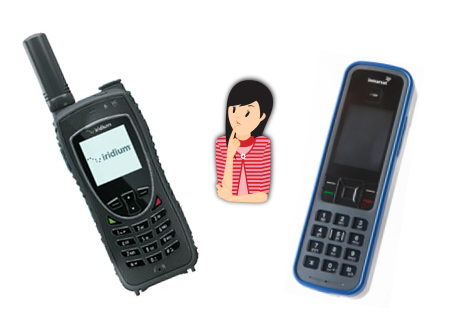
Your sales agent will ask you where you’re going to be traveling, where you will be using the phone?  Tell him or her that you don’t know where you are going, that you want it to work everywhere, well, virtually everywhere.  (In order for any satellite telephone to operate, hand held or not, the antenna has to have “clear line of sight” to the satellite.  There will be places where this isn’t realistic but more on that later.)  By establishing that you want the phone to be able to work anywhere on the planet you have just eliminated a couple of “regional” satellite constellations, leaving you now with two choices, the Iridium 9575 and the IsatPhone Pro.

The Iridium 9575, which operates on the 15+ year old canopy of 66 low earth orbit (LEO) satellites and the IsatPhone Pro, which operates on the four (4) year old Inmarsat constellation consisting of three (3) geosynchronous high earth orbit (HEO) satellites.

You have the Iridium 9575 at a price point of $1,500.00 + or – and the Isatphone Pro at (generally) under $700.00.  (Remember there’s always a premium on “sexy” and the 9575 is definitely sexier.)

You have the near schizophrenic rate structure policies of Iridium compared with the “not quite but almost as” schizophrenic Inmarsat rate plans.  (I swear, you would think that neither of these companies had spoken with an actual customer in years.)  You can take some comfort in knowing that virtually every satellite constellation is fixated on making their usage plans just as convoluted as they possibly can, and they’ve succeeded brilliantly!  A good sales rep can help you navigate this mine field though.

Here’s a look one at a time:

A canopy of 66 LEO satellites means that there should almost always be one overhead, making for easy connectivity.  It also means that during the course of your conversation the earth is rotating out from under the bird that you’re using, necessitating “passing you off” to the next satellite moving into range.  That can cause “dropped calls”, not always but it can.  Latency, the time it takes for the listener to hear what you said after you stop talking, is negligible with LEO satellites.

The fact that at 15 + years old the satellites are nearing the end of their useful life, well, only you know your tolerance for gambling.  For a couple of reasons, one being the shorter distance traveled to the satellite, the 9575 initializes quicker and will get you “on the phone” making calls faster.  No Bluetooth compatibility with the 9575.

Once you lock on to one of Inmarsat’s (3) HEO geosynchronous satellites you will not need to be “passed off” to another bird, minimizing the chance of dropped calls.  However, if you get your head between the antenna and the satellite you can drop the call anyway so just keep the antenna pointing straight up and you’ll be fine.

The fact that all (3) satellites are located high above the equator means that it might be more difficult to “see” the satellite, especially at extreme Northern and extreme Southern latitudes where the curvature of the earth can block the signal.  (See “clear line of sight” comment earlier). This should be a non-issue from everywhere else on the planet.

The IsatPhone Pro is Bluetooth compatible and GPS capable.  Handhelds are often carried just for emergencies so I don’t have to tell you how important it could be to be able to text your GPS coordinates to someone should the need arise. You will experience a bit more latency than with the 9575 but nothing you won’t adapt to after a minute or two of conversation.  Both phones offer really clear transmission quality.

We’ve already addressed the cost of owning these phones.  Only you can speak to your budget.  Generally speaking it will cost you less to maintain the IsatPhone Pro in an operable status while it collects dust sitting on the shelf in your home or office, where most handhelds hang out.

Portable Satellite Internet and Voice to the Rescue in the Philippines

manon phone

On October 18th the island of Bohol in the Philippines was struck by an earthquake measuring 7.2 on the Richter scale. Damage is catastrophic.

Communities on the island are devastated with more than 3 million people affected. ThereBGAN Hughes 9202 Satellite Internet is severe damage to thousands of homes as well as roads and other infrastructure. Some 600,000 families continue to be without electricity due to the landslides triggered by the earthquake.

Some communities located in remote areas of the island are completely isolated due to damage to the communications infrastructure.

Equipped with Inmarsat BGAN terminals, Télécoms Sans Frontières (TSF) has dispatched a team of telecommunications experts to the island to help with communications related issues.

“We are aware of the need for telecommunications in disaster zones and are reaching out to the most remote areas of the island, to not only help co-ordinate the much needed humanitarian aid, but also to provide means of contact for the many families affected by this disaster,” said a TSF spokesman.

Team members of the emergency telecoms group are equipped with portable Satellite Internet devices via BGAN and Isatphone handheld satellite phones.

MSAT G2 Satellite Radio Video

Check out the new MSAT G2 Satellite Radio Promotional Video

Wessex Water uses BGAN Satellite Vehicular System

hardware

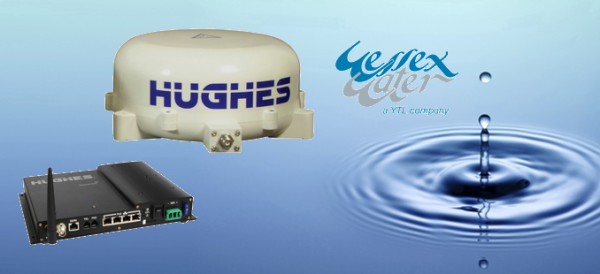
Wessex Water, a British utility company equips its rapid deployment emergency response teams with BGAN satellite by Inmarsat. The company currently provides water and sewage services to nearly 1.3m people across the south-west of England. Company Managers decided to upgrade their communications systems to support a rapid response in remote areas where cell phone service is spotty, non-existent or unreliable.

Inmarsat partner Hughes, which supports a solution offering automatic rollover from 3G to satellite utilizing the very portable, very cost effective, light weight and ruggedized 9450 Vehicular BGAN satellite terminal. The 9450 allows utility company crews to stream live video from the scene of incidents, keeping communication channels open when cellular coverage is not available and synchronizing communications between mobile units and the command center.

“We’re proud to have been chosen by Wessex Water for this critically important service,” said Chris O’Dell, Vice President of Sales and Marketing, Hughes Europe. “Wessex Water’s engineers previously faced an uncertain communications environment when responding to a major incident.”

How can I send and receive emails through my satellite phone?

satellite optimizer

Looking to send data over your satellite phone but don’t know where to begin? Problem solved…and for less than the cost of dinner for 4 with a bottle of wine in a nice restaurant!

Iridium, Inmarsat, Globalstar, Thuraya, or Lightsquared, regardless of which constellation or which portable satellite internet device you’re using, with XGATE together with the Optimizer you’ll be:

  • sending and receiving emails
  • attaching files
  • sending Tweets
  • updating your Facebook page
  • using VOIP
  • downloading weather data (receive GRIB files)
  • redit card processing
  • transfering files – manually and automated.
  • web browsing and web caching with XWEB
  • sending videos and images

Compatible with nearly every known operating system available in the market today, the Optimizer powered by RedPort, will keep you in touch with the people that matter the most, be they family, friends or business associates. Not much larger than a deck of cards, the Optimizer interfaces with virtually every data capable satellite radio on the planet including the BGAN satellite, MSAT G2 and IsatPhone Pro, just to mention a few.

XGATE is state-of-the-art data compression software. The Optimizer is a router that creates the ultimate firewall and WiFi hotspot. Together they provide the perfect combination of airtime saving efficiency, virus protection, while easily accessing the services that you need.

That file that may have taken 10 MB’s to transfer now may take 2. What may have taken 60 minutes to transfer now may take 3. On average, XGAT uses only 5% of the data of a standard email program. That means that you will save up to 95% of airtime costs compared to using your satellite email without XGATE. That’s a HUGE savings!

Choose one of 22 available languages. Use an “included” email address or the same old familiar email address that you use with Outlook or Apple Mail. There are even options that allow you to set the SEND and RECEIVE addresses so others see whatever email address you would like them to see.

XGATE BigMail gives you a heads up when someone sends you an extra-large file, giving you the option to elect to download it now or wait until you are on another connection. XGATE gives you the files that you need when you need them, saving the video of Fido for later. XGATE servers scan every email for viruses and spam, blocking them before they go over your satellite system, saving you money in airtime costs and keeping your device clean.

XWEB works with XGATE to let you browse the Internet, with 3 to 5 times average acceleration, unheard of before in satellite technology. In fact, when was the last time you even considered browsing the internet over your BGAN satellite, IsatPhone Pro or MSAT G2? I thought so!

So, to summarize, the Satellite Optimizer with XGATE provides:

– The services that you want…Email, Internet, Weather, Social Media, Blogging and GPS Tracking
– The way that you want them…Easy, Affordable and Reliable
– The Devices that you use…Computers, Tablets, and Smart Phones using Apple iOS and Google Android
– The satellite networks that you need…Iridium, Inmarsat, Globalstar, Thuraya and Lightsquared.

Is Satellite Phone technology really that difficult to use?

Satellite Communications Technology

Complicated or… not so much?

One of the most often asked questions that we get from prospective portable satellite internet and voice customers concerns the skill level required to operate the communications terminal itself. Because the technology behind the construction, launching and operation of the satellites themselves is so incredibly complex the natural tendency is for people to assume that it also takes a high level skill in order to operate the satellite telephone itself.

Nothing could be further from the truth

While it is true that there are some satellite terminals on the market that do have a steep technical learning curve, the very popular MSAT G2, does not. Arguably perhaps the most underrated workhorse communications terminal available today the MSAT G2 is truly “plug and play”. There may be technical “installation” expertise required for installing the G2 in a vehicle or on a sea going vessel but there is no expertise required for assembling the terminal for “operational” status. Within 15 minutes of delivery you can have your MSAT G2 assembled, powered up and READY TO COMMISSION. It just doesn’t get any easier than that.

What does “READY TO COMMISSION” mean?

Your MSAT Service Provider, perhaps (but not always) the same person you purchased the terminal from, will need to register your portable satellite radio onto the MSAT satellite network. As a result of the registration process he will have some numbers that will need to be programmed into the satellite terminal handset. He can either provide you the numbers and commissioning instructions to do this yourself or, more commonly, he will walk you through the process over the phone.

How complicated it the “COMMISSIONING” process?

Would you believe 5 steps and 5 minutes? That’s all there is to it!

We do this ALL THE TIME for our customers. With your cell phone in one hand (or sitting on a table in “speaker mode”) and the G2 handset in the other hand your MSAT Service Provider will take you through the 5 steps, step by step, culminating in “commission pass” appearing on the handset LED display. Congratulation, you’re operational, child’s play compared the effort it took to learn how to operate the REMOTE for your new flat screen TV!

Yes, but how difficult is it to learn to OPERATE the telephone?

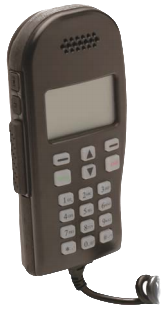
This might take another 5 minutes. Actually, you will have probably learned to operate theMSAT G2 Satellite Radio push to talk handset terminal via the COMMISSIONING process. If you can operate a cell phone you can operate the G2 as they have virtually identical dialing and answering protocols. Squeeze the PTT microphone, wait ½ second and begin talking. When you’ve finished talking release the PTT mike and listen for a response. You just learned how to operate the Dispatch Radio function. (For more on Dispatch Radio…link.)
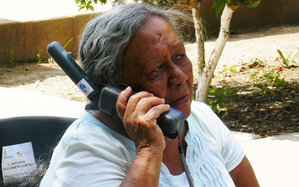
Remember, by definition satellite telephones including the iSatPhone Pro are engineered for installation and use in remote locations; off shore vessels, over the road trucks, remote terrestrial outposts, just to name a few applications. Customers typically do not have ready access to technical support from these locations. While the vessel captain or the over the road driver has his own highly defined skill set, that skill set most probably does NOT include the use of satellite technology. The MSAT G2 does an excellent job of providing current generation satellite technology in a straight forward easy to understand operational protocol.

When it’s all said and done.

  • We are usually smarter than we think we are
  • The equipment is usually easier to operate than we think it will be
  • We usually underestimate our own capabilities

Typhoon Yolanda victims find communication relief with sat phones

man on steps

Perhaps as many as 10,000 people have perished with hundreds of thousands more displaced from their homes in the Philippines as a result of Typhoon Haiyan. Named “Yolanda” by the Filipino authorities, the typhoon is considered by many to be one of the most powerful, if not the most powerful, storms in recorded history causing certainly one of the worst natural disasters in history.

Yolanda struck the eastern coastal provinces of Leyte and Samar on November 8, 2013, a day certain to be remembered as one of the worst days in the history of the Philippines.

Initially slow to get started due to looting concerns and the lack of infrastructure in place to support it, aid has since ramped up to a furious pace as troops and supplies continue to flood to the area from all over the world.

Always a significant challenge in any such natural disaster is providing the communications required in order to coordinate the delivery of humanitarian aid to thedevastated areas. Also, one cannot underestimate the need for the desperate victims of Yolanda to be able to communicate with their families both within the country as well as throughout the world.

Telecoms Sand Frontieres (TSF), working in conjunctions with the United Nations, has provided two teams equipped with BGAN satellite technology and handheld Isatphone Pro satellite phones by Inmarsat to coordinate relief efforts throughout the island chain.

Anticipating the extent of the disaster, Inmarsat was able to get the equipment to the islandsTyphoonYolanda ISatPhone Pro resized 600 before the typhoon struck. This proved significant in expediting the search and rescue efforts by the Minister of Home Affairs and facilitating victim communications with loved ones thought the world. One cannot underestimate the importance of just being able to tell loved one that you are ALIVE!

“We were able to set up three telecom centers for relief co-ordination before the influx of humanitarian aid arrived in the aftermath of Haiyan,” said a TSF spokesman.

Once again, Inmarsat stands at the forefront of disaster rescue and relief efforts worldwide. Thanks to BGAN satellite and the Isatphone Pro, a horrible situation is made just a little less horrible.

images: TSFI.org